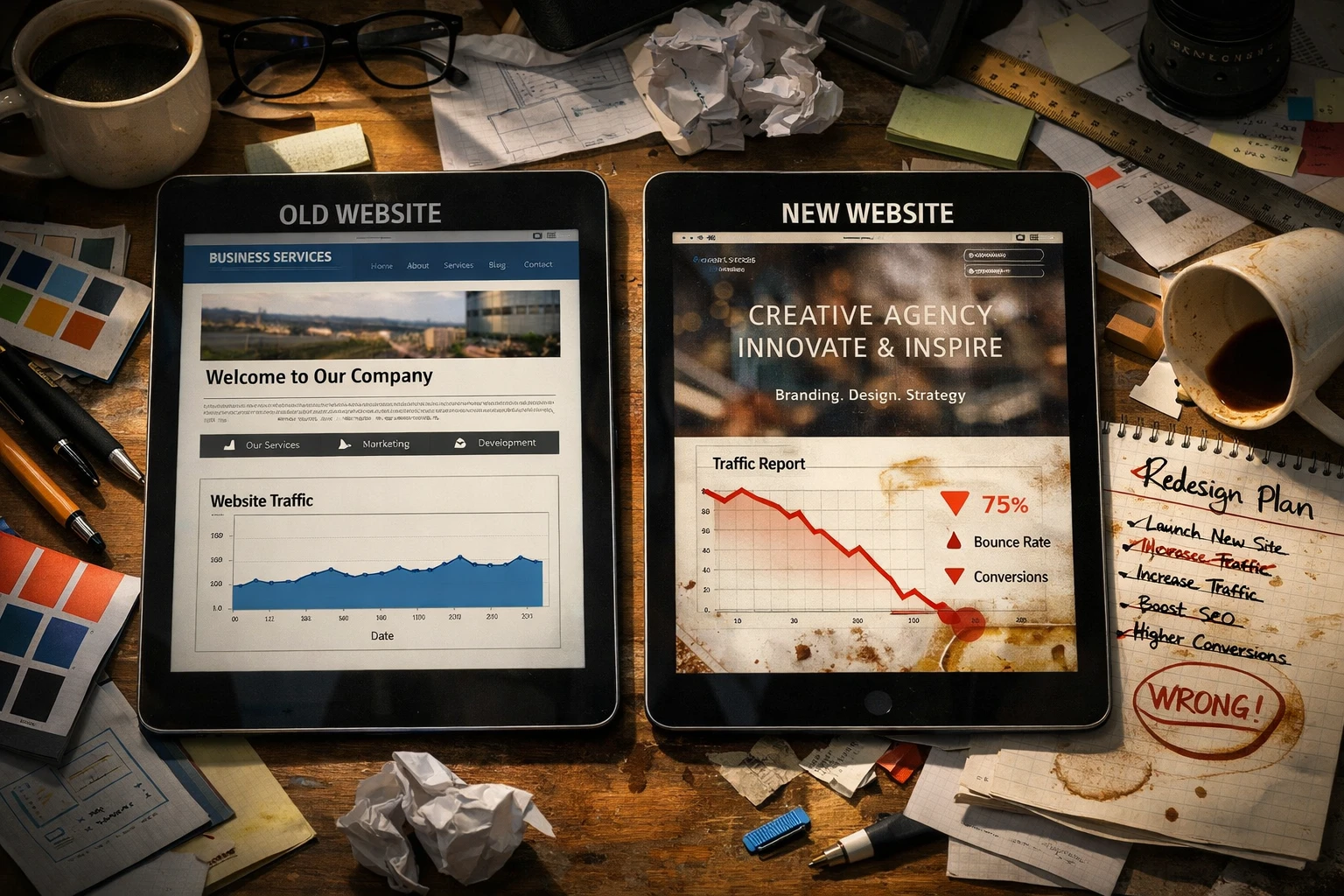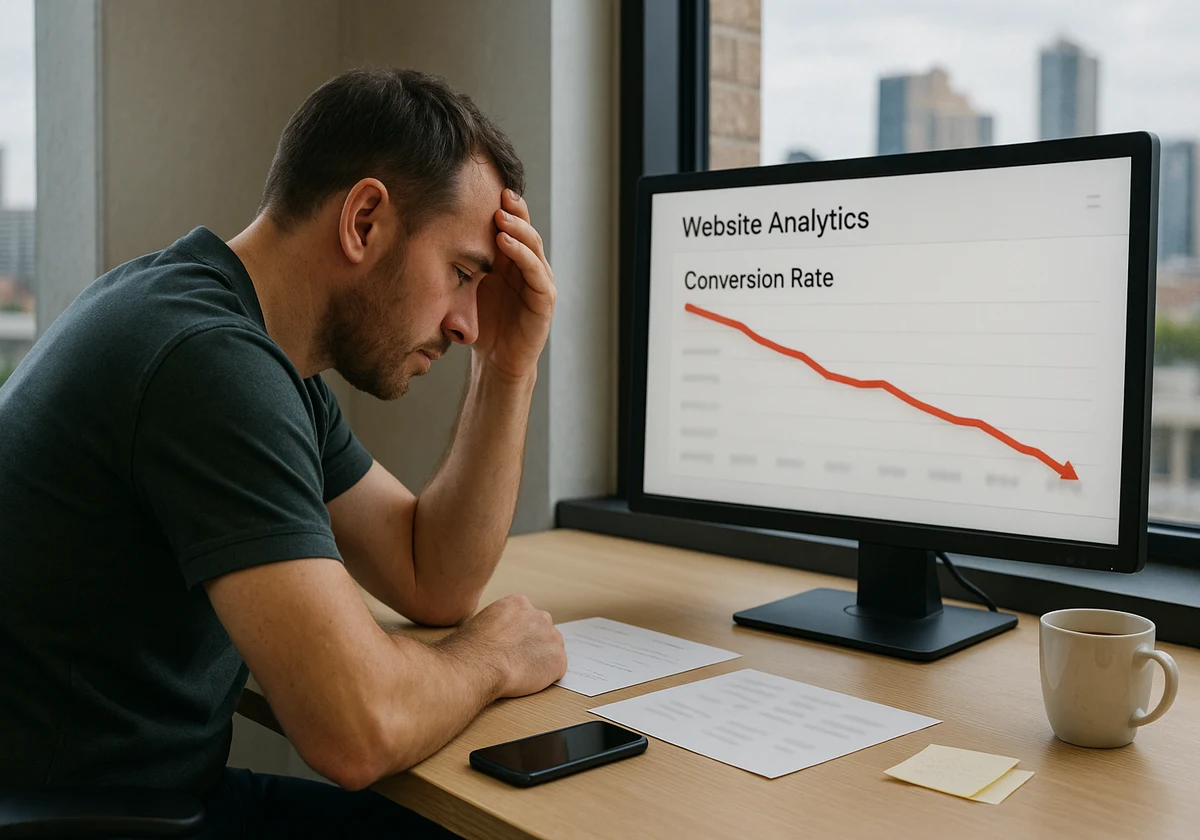
Templates may help you get online quickly, but they lack the branding, performance, and flexibility a custom website provides. While website builders like Wix and Squarespace seem convenient, the trade-offs become clear later, and it often surprises business owners.
At JDDST, we’ve created custom websites for businesses in Brisbane from many different industries. This experience has shown us what helps companies succeed online and what can hold them back.
In this article, we’ll discuss:
- Why custom website design outperforms templates
- The key differences between custom and template websites
- Hidden downsides of template sites
- Whether custom web design is worth the investment
Ready? Let’s begin.
Why Custom Website Design Outperforms Templates
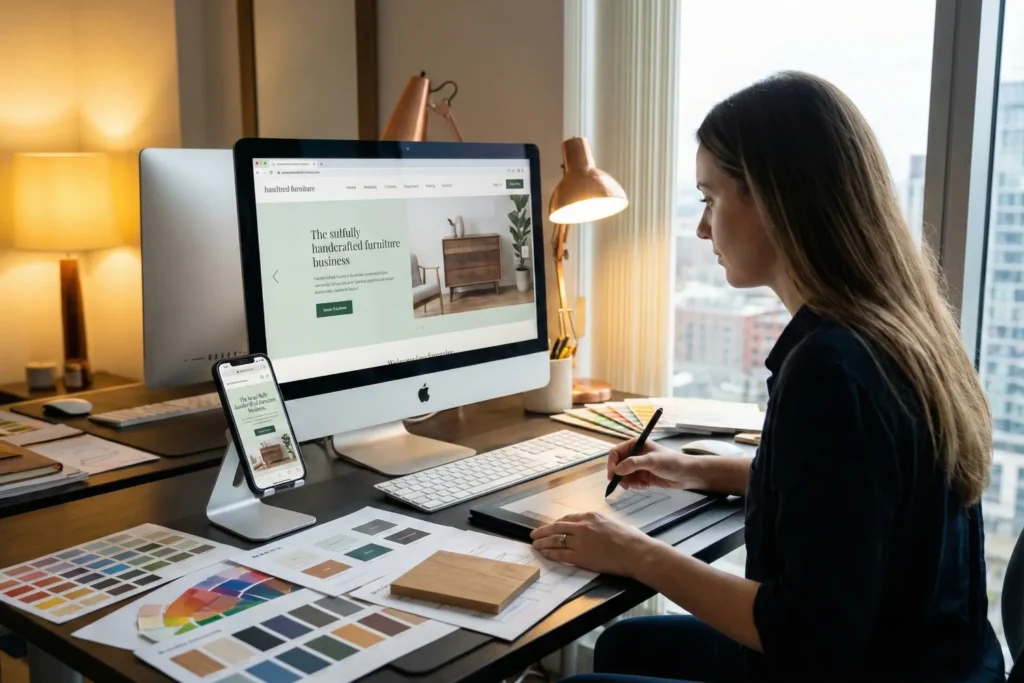
Custom website design outperforms templates because it gives you complete control over branding, user experience, and performance. When your site is built from scratch, every element serves a purpose. Nothing is there just because a template developer thought it might be useful for someone, somewhere.
We’ll now take a closer look at these factors.
Stronger Brand Identity and First Impressions
A personalised website design makes your business instantly recognisable and builds trust faster. That’s because your colours, fonts, layout, and messaging all work together to tell your story rather than fitting into a pre-made mould (people trust what feels authentic more).
Honestly, templates can’t offer this level of uniqueness. The same theme you’re using might be running on a competitor’s site right now with slightly different images. And potential customers notice when something feels generic, even if they can’t pinpoint why.
According to the Stanford Web Credibility Project, a leading research initiative focused on web trust, in their study “Web Credibility Project”, users often judge a website’s credibility within seconds. It happens based on design elements like layout and professionalism.
So, a well-designed website can quickly build trust, while generic templates may make a company appear to have cut corners.
User Experience Built Around Your Customers
One of the best things about custom web design is that you control exactly how visitors move through your site. It allows you to create navigation that fits your target audience’s needs.
Consider a Brisbane e-commerce store that sells handmade furniture. The owner knows that customers want to filter by timber type, size, and room. A custom website lets them build that exact system.
A template might offer basic sorting there, but getting it to work properly often requires huge and clunky plugins. Plus, template layouts force visitors into journeys that weren’t designed for your business.
In comparison, a smooth user experience keeps people exploring longer and converts more enquiries.
Pro tip: A/B test different layouts and features regularly to find the best-performing user experiences.
Better Performance on Mobile Devices
Did you know that most of your potential customers are browsing on their phones? Mobile devices now account for over 60% of all web traffic, which makes having a responsive, custom website truly important. These sites load faster and display properly on any screen size.
Also, when you have a custom site, the web developer can optimise images, simplify the code, and test the site on different devices to make sure it works well. Plus, when your site loads quickly on mobile, it keeps visitors from leaving (no delays means no distractions).
Unfortunately, generic templates often don’t work well on smaller screens. Most of the time, the menus overlap, text is hard to read, and buttons are too close together. Google also considers page speed in rankings, so slow mobile sites can hurt your visibility and conversions.
What Is the Difference Between Custom and Template Websites?

Custom websites are built from scratch by web developers, while templates use pre-made layouts from website builders. The difference comes down to how much control you have over the final result and how well the site fits your business.
With custom web design, a professional web designer starts with a blank canvas. Every page, feature, and design element gets created specifically for your needs. You’re not working around limitations or settling for “close enough” because something doesn’t quite fit.
Meanwhile, website builders like Wix and Squarespace work differently. They offer pre-made layouts that you can tweak with colours, fonts, and images.
Although the setup process is faster and cheaper upfront, you get limited flexibility. Like, if you want a feature that doesn’t exist in the template, you’re either paying for plugins or going without.
Even then, the bigger issue is uniqueness. Template websites share the same underlying design as thousands of other businesses. Your site might look polished at first glance, but so does every other company using that same theme.
Take a look at this quick comparison table to understand the differences better:
| Feature | Custom Website | Template Website |
| Design Flexibility | Unlimited | Limited |
| Brand Uniqueness | Fully bespoke | Shared with others |
| SEO Control | Complete | Restricted |
| Load Speed | Optimised | Often bloated |
| Scalability | Grows with you | Outgrow quickly |
| Security | Tailored protection | Common vulnerabilities |
| Ongoing Costs | Higher upfront, lower long-term | Lower upfront, higher long-term |
As you can see, a custom website offers far more control, flexibility, and long-term value than a template-based one.
What Are the Hidden Downsides of Template Websites?

Template websites come with security risks, bloated code, scalability limits, and third-party dependencies. Most site owners don’t notice these problems until it’s too late. At that point, fixing them tends to be more expensive than just building a custom site from the beginning.
Here are some of the most common downsides of template websites:
- Security Gaps: Hackers love templates because the code is public knowledge. More specifically, when thousands of sites run the same framework, one exploit opens doors everywhere. But custom websites don’t carry that target.
- Plugin Problems: Template sites rely heavily on plugins, which means more things that can break. Those handy plugins need constant updates to stay secure. If you miss just one update, you’ll leave a vulnerability wide open.
- Scalability Limits: You may find that templates handle basic pages just fine at first. But if you try adding complex filtering, custom checkout flows, or inventory syncing later on, you’ll start facing complex issues.
- Growth Bottlenecks: What works for a small, five-page site often falls short as the site grows to fifty pages. It’s because features like booking systems, member portals, and multiple user logins weren’t designed with templates in mind. So you can’t scale your site if you wish to.
- Bloated Code: Templates come with features you’ll never use, but the code for them still loads every time someone visits your site. It slows down your page speed, even if those features aren’t being used.
- Weak SEO Foundation: Messy code makes life harder for search engines trying to crawl your pages. From our experience, custom builds start cleaner and give you a stronger base for rankings.
- Platform Dependency: In 2020, Adobe shut down its Muse website builder, which caused many users to look for alternatives. Similarly, template providers can change pricing, remove features, or shut down at any time (often without warning). These sudden changes can leave you unprepared and disrupt your business.
- Ownership Risks: You’re basically renting your website with templates. However, a custom website is completely yours. You own everything and have complete control over your digital presence.
In short, the advantages of a custom website far outweigh the limitations of templates.
Is Custom Web Design Worth the Investment?

Custom web design is worth the investment because it costs less over time and delivers better results for your business. The upfront price tag looks higher, but the maths changes when you factor in what templates actually cost you down the track.
Let’s get into more details about these considerations.
Upfront Costs vs Long-Term Value
The real savings from custom website design show up over years instead of months. As we mentioned earlier, templates seem cheaper at first glance. Yet, the costs add up with premium plugins, ongoing fixes, and workarounds that never fully solve the issue.
Not only that, but custom websites also need fewer rebuilds because they’re built to grow with you. In general, you might need to replace your template site entirely within a few years when your business outgrows its limitations. That second build wipes out any savings you thought you had.
The following table provides a clear comparison of the two options:
| Cost Factor | Custom Website | Template Website |
| Initial Build | Higher | Lower |
| Plugin/Add-on Fees | Minimal | Adds up over time |
| Maintenance | Predictable | Variable |
| Redesign Frequency | Less often | More frequent |
| Total Cost Over 5 Years | Often lower | Often higher |
Professional website design also pays off through better conversions. It’s because when you build your site around how your customers actually behave, more visitors turn into leads and sales.
What to Expect From a Professional Web Designer
A professional web designer will guide you through a well-structured process. It usually begins with an initial consultation where they learn about your business goals, target audience, and the issues with your current website.
Throughout the process, you’ll work closely with the designer. In particular, you’ll review concepts, provide feedback, and set the direction together.
This collaborative approach is possible because a good agency sees it as a partnership rather than just delivering a finished product (and partnerships lead to better results, hands down).
Ongoing support is part of the deal, too. Based on our experience with small business owners, the relationship shouldn’t stop after the launch. As your business grows, your website will need updates and security fixes. And the continuous support ensures your site stays secure and continues to meet your needs.
Pro tip: Make sure your designer is knowledgeable about SEO to ensure your site is built with search rankings in mind from the start.
Build a Website Your Customers Will Remember
Now you can see why custom website design is better for growing businesses. It offers stronger branding, better SEO, faster performance, and full control over your digital presence. All of them lead to actual, long-term results.
If your current site feels limiting or looks like every other business in your industry, it’s time to move beyond templates. Small business owners who want to generate leads and increase conversions need a website designed to meet their specific goals (not one that forces compromises with a pre-made layout).
We at JDDST are a Brisbane web design agency that builds custom websites for local businesses. Contact us for a free initial consultation, and let’s talk about what your new website could look like.